The state of architecture is a disaster. Ever since Adolf Loos wrote “ornament is crime”, architects have booed anything decorative. We get textures, sure. Oh boy do we get textures. We get all the woods, all the stones, all the 3d printed concrete. Sculpture? Hell, no…
And no it’s not that expensive. When you build 234 park avenue, every apartment sells for $10m. maybe there is some of it that can go towards making things fun a little bit.
The worst part is even Modernist heroes like Corbusier and Wright did fun stuff. The Church at Ronchamp is weird and playful. And Wright’s blocky mayan influence is
crazy and refreshing.
Not asking your everyday architect to change overnight, but the people who influence the profession, give the prizes and write the articles seriously need to change.
Screw the ornamental stuff, when do we start getting different large-scale patterns in spaces to live and work?
Long dark hallways filled with apartments where nobody knows each other or has any occasion to interact. Secluded offices vs. anxiety inducing planes of "open" disasters. Apartments designed to be a shrine to a television and a small bedroom with light only suitable for cave dwellers.
The shape of spaces is important and shapes our quality of life. I would like to see a revolution in that much more than a different kinds of facade.
Sure, that too. Architects don't give a shit about interior spaces. They have interns do the plans. What they are lauded for is the exterior, the big hall and the sky terrace.
To be fair the working space is being experimented upon. The open spaces are fairly new, and there are plenty of workplaces also where people don't have attributed desks, they just walk around the building and sit wherever they want. Whether any of it works, I don't know...
> To be fair the working space is being experimented upon. The open spaces are fairly new, and there are plenty of workplaces also where people don't have attributed desks, they just walk around the building and sit wherever they want. Whether any of it works, I don't know...
All of this is purely driven by cost cutting.
Many jobs require deep concentration and quiet and in places that respect this you get individual offices (extremely rare for the entire company, but notice that in 99% of companies every level above manager tends to get an individual office) or team offices (probably the best compromise in terms of cost - socialization trade-off).
The flexible desk ("flex desk") setups work for some things, but they tend to suck, too. You have to take everything with you, generally. Over the ear headset? Bring a bag! Favorite mug? Probably the same. Pens, notes, whatever? Nomad life style.
> Architects don't give a shit about interior spaces. They have interns do the plans. What they are lauded for is the exterior, the big hall and the sky terrace.
This probably the true for those big and famous offices (especially the part with interns). But "Architects" is broader group then that. Smaller offices often do consider internal spaces. Also sometimes it is often challenge to design it in way that can survive yak shaving [1] in commercial projects.
[1]: this one often occurs even after original budget was met in the design. That is why public projects are more attractive to many architects even if they are often more modest.
> Architects don't give a shit about interior spaces. They have interns do the plans.
As a rule of thumb, main architects are just sellers. They sell projects to clients and authorities - only. Most senior architects are project managers, they don't plan anymore, at most they give some ideas and impose limitations. The rest, including "interns", do the bulk of the project, interiors or facades.
This is the one area driven purely by economic factors, any developer commissioning the building will let the architect have free reign on the exterior or overall building shape on the proviso that it maximizes leasable floorspace inside. Exciting and interesting interior spaces either use up space or are less marketable catering to a smaller subsection of the market.
I have long wanted to make a coffee-table book called Lonely Architectural Spaces, not because I enjoy them but because I'm fascinated by how big an impact they have on my mood and psyche.
You might love "Liminal Spaces". There are a few blogs with collections of images, but I think my favorite place to view them is the subreddit: https://www.reddit.com/r/LiminalSpace/
Local zoning/regulations/politics also play a significant role in limiting types of housing. In general, development projects are going to play it safe to try to get a plan approved.
My grandmother had a saying from when she and my grandpa moved around various Air Force bases: "the closer your neighbours, the less you want to know them"
That's what I love about Barbican in London. It's really hard to convey in pictures, but despite being a brutalist building, it's totally unpredictable and different at every turn and is alive in a much deeper sense than "organic shapes" or wooden panels that we get nowadays. It's a maze of a block that might be annoying to get through if you're in a hurry but is so much more natural in its nature than a typical city block.
I guess it's just way more expensive to design than those standard boxes we see everywhere.
There are multiple problems in the architect community. One is the marquee architects were all raised up in a post-war era where--some have argued--their designs are more influenced by PTSD than art. The brutalism of a modern building was certainly influenced by the materials--prestressed concrete and poured concrete, for example--but to put a stark and ugly face on a building requires a broken mind.
Those marquee architects influenced the later architects, who aren't as broken, but still want the cache. So they add "textures." Then, when CAD took off, it got even easier to do big boxes fast and cheap. The premier design software today, Revit, is so good at churning out box buildings.
We were able, through materials science, to increase vertical density at the cost of human scale structures. Lost is the recognition that buildings don't stand alone. They are a part of society, and the way buildings are designed and built reflect the society they are in, and they affect the society in which they are placed.
We don't build grand buildings anymore. What we build looks more like the box a building would come in. The interesting thing is, if cheap energy ever becomes scarce, all these lauded brutalist structures will become useless. While the stout, high-ceilinged brick and stone structures, with operable windows and lots of natural light will remain.
It's certainly debateable. In a place with constrained real estate, like NYC and Tokyo, there isn't really any choice. When thinking about "human scale," it helps to emphasize the human part of the equation. Can a human walk up 57 flights of stairs? Yes, but not many. Can a human walk from one side of Orlando to the other? Yes, but not many, and a lot of them will be smooshed by cars.
Orlando wouldn't be human scale any more than the Burj Kalafia is. Orlando is automobile scaled, and would suffer the same consequences as the Burj if energy costs skyrocket.
That said, there are some people who thrive in places like NYC. It takes a certain kind of person to be able to deal with the sea of humanity, and not a lot of people can.
I am imagining a psychology experiment to collect data on the value of ornamentation— eg, having people estimate the relative value of similar buildings in different styles. I think the modernists never got that part of the “function” of forms is to create a neighborhood vibe. Ornamentation can have a huge effect on this.
I’d love to see a return to small sculpture elements based on 3D printing and concrete casting — even if it starts with wholesale copying of ornamentation that works well from the late 1890s.
This is the intro of a Soviet Christmas romantic comedy, with the premise that the main protagonist, quite drunk, gets into a taxi, gives the address of is home, gets there, unlocks the door with his key and go to bed, only to realize a bit later that something was wrong when an unknown woman enters... Everything was identical to his apartment (street name, number, building, keys, etc)... except he is in Leningrad and not in Moscow.
Every architect I've met is like a jaded COBOL programmer at the government that refuses to leave their niche because change increases the chances of you getting fired.
From my experience I would say completely the oposite, every intern is a Idris or at least a Haskell programmer. Architectural offices, soon or later, will make them Java programmers.
COBOL programmers are the government authorities and the typical investor.
I remember reading that architects have one of the highest job dissatisfaction rates in the US. Which makes sense comparing the kinds of projects I saw the architecture students due in college with the architects I've met, whose excitement is designing the ductwork in strip-mall Target stores.
I kind of always wanted to be an architect, and my skillset largely seems inclined toward it; so much so that growing up, my dad was sure it was what I’d do. But EVERY exposure I had to young people in the industry, and even education to an extent (Saw a passionate friend quit the UMich program) belied the sentiment we’re bemoaning here. I wound up consigning my impulses to representational painting.
Out of curiosity, before modernism, what would an architecture curriculum have looked like? Are there any foundational texts?
*I don’t hate modernism, lots of it is pretty cool. However, I hate what it did to the pedagogy of painting. It set me back ten years because it was so hard to find anyone who knew what they were talking about. Western art departments figuratively and literally destroyed the basis for teaching representational aesthetics, which had been developed for thousands of years, and then celebrated themselves for doing so. Now, relatively, no one knows how to draw.
I suspect something similar happened in architecture, and in light of that, I don’t know who to trust or approach on how to start self-learning. I’ll never build cool buildings, but I can design them and use architecture to inform my painting.
That’s a good way to put it. I know a number of architects, 99.9% design the equivalent of Taco Bell’s. Unless you’re exceptional it’s a very mind numbin job where you’re easily replaceable (like most everything else).
This misses a big point: highly skilled craftsmanship will never again be affordable on an architectural scale. So we'll have it again when it can all be done by machine.
It costs human lives to build a Notre Dame, both in deaths and in total lifespan output, and as for Sagrada Familia it's still not complete. We now value human life and labor too much to be able to afford it.
I personally can't wait to have detailed, warm, organic architecture back again, but I damn sure don't want to carve any stone.
Stone and wood is carved by machines quite easily. Sears used to churn out homes with loads of detail and mail them out wholesale to middle class folks. Those homes are now worth fortunes.
We have terrible architecture for ideological reasons. Flat roofs are not signifincantly cheaper to build than pitched roofs, and far less adept at roofiness, but we got flat roofs from bauhaus philosophy.
As with most modern art, architecture has a fundamentially adversarial relationship with the vast majority of people.
I'm trying to pitch a flat section of roof on my house because it leaks. Flat roofs are sometimes flat because of too-low or badly-defined building height limits.
Boringness also probably comes from increasing numbers of people involved in approvals. Try getting some wild thing through public hearings and city councils. Much harder than a cube. The boringness is a feature, not a bug.
I bet there's a ton of other factors too, like the cited attention cost of detail.
I really wonder how is that so. Even in my home country which is easily in the bottom 10% of Europe's poorest I lived in a building built in 1977 (!) with flat roof. It never had a leak until this year, and on the first sign of it tenants found some company to install some membrane and gave them 10 year no-matter-what warranty on it. And it was super cheap when divided on 30 owners. And we're talking about a country with average monthly salary of $400 or so.
I've heard this stated a few times - that flat roofs are meaningfully cheaper - but really? How? The tiny bit of extra material to add a bit of height to some ridge seems trivial. Where's the cost?
Hardly any new houses are built with flat roofs. That trend is mostly dead. Commercial buildings still have flat roofs because they need a place to mount stuff like HVAC and antennas.
It's partly a climate thing. Flat roofs in areas with snow are begging for all sorts of leaks and general snow load problems. There are probably houses in the Northeast built with flat roofs. They probably also have leak issues. Heck, houses with sloped roofs often have problems at junctions and with ice dams. Commercial properties are, in part of the reasons you cite.
Lots of places in the northeast with flat roofs. Particularly dense city centers where snow falling off sloped roofs poses a danger to busy pedestrian sidewalks. As long as you keep your roof maintained it’ll last a long time. And “flat” roofs are always angled at like 1-2 degrees to ensure proper drainage.
I've always assumed that the boxy things were more about maximizing saleable square footage and less about architecture. Also, "rooftop balcony" is a nice price adder!
I don't hate the boxy things, I just hate that there's nothing else being built in Seattle right now except boxy things. And they're not much to look at.
Yes, a common construction are these five-over-ones, with a steel-reinforced concrete first floor (for retail) and then wood framed 5-story apartments above.
This podcast goes over what an absolute disaster this type of construction is [0], but for apartments in most major US cities west of the Mississippi, it is hard to avoid _some_ sort of wood framing.
Not really. Frank Lloyd Wright was building with flat roofs a decade before the Bauhaus school even opened. But it was certainly an artistic endeavour and he’s a great example of somebody who had an adversarial relationship with pretty much everybody.
Wright used flat roofs and I'm sure other folks did before him, but bauhaus was the intellectually dominant influence on schools of architecture in the west.
Besides the Larkin building (a factory), what did he build with predominantly flat roofs? I don't think there's a home he built prior to fallingwater that was anything close to what Bauhaus did.
Not every art deco beauty is forged in blood. Not like people need to die for you to stop installing drop cielings and beige cubicles. We've just decided as a society recently that we value spending the bare minimum. These old architectural works, even just from the 1900s-1940s, were from a different time, when property owners wanted to spend extra on making something look striking and remarkable. You don't see that line of thinking in business anymore. Imagine a CEO spending on some ornate HQ building with stonemasons and gold leaf, shareholders would fire them. You only see that level of grandeur today when the CEO founded and still is in control of the company and the shareholders can only sit and pout. Luxury buildings today come with the cheapest furnishings the developer could find on the wholesale marketplace.
> highly skilled craftsmanship will never again be affordable on an architectural scale
Is that why those award-winning buildings look like that? Because the architects tried to make them cheaper?
Is 'detail' requiring highly skilled craftsmanship the only way to make pleasant buildings? Because a few of the buildings (Venice and the Italian village) the article gives as examples of beauty have only the barest, simplest of details.
Our society is quite capable of paying for artisans to restore the architectural splendors of earlier times, and does so. At the same time, expenditure on architecture for its own sake seems to have increased in the last decade or so, at least in centers of wealth (which, in modern times, is where non-utilitarian architecture has its first home, even if it likes to have a weekend place in the country.)
What has not happened is that, for the most part, the paymasters for the latter development have demonstrated little interest in adopting styles that demand highly skilled craftsmanship of the sort formerly valued (and still valued, apparently, so long as it dates to a previous era.) Today's vanity architecture reflects the values of those who commission it, rather than being a result of market prices for artisan work.
There was an explicit goal of providing education and opportunities to working people. (Well - working men. But this was over a century ago now.)
Modern philanthropy has no equivalent. There is no interest in creating high quality useful public spaces for ordinary people. So there's no architectural tradition to support that goal.
Its very hard to get contractors to work with materials today. So you can have some factory create panels of steel and glass, and the contractor can have (relatively) unskilled cheap labor snap them into place. That's a lot of construction today.
Some really beautiful structures do use minimalism, but so many big architects today strive for speed, size, and function. I think most modern beautiful, minimalist structures are usually smaller, built for fewer people, etc. Maybe?
Those Italian buildings were created as highly practical structures at the time, in waterway locations that constrained the geometry of how the city grew, so they have an interesting and historical appearance. Also a lot of the Italian architecture is not a building, but an entire city, not sure those really count.
Hamburg’s philarmony cost 900 million euros to build. That’s an awful lot of money. Architects decide to spend on structure and texture instead of decor. And with today’s machines, we actually could make all these intricate details without human intervention.
The Elphi could be seen as of corruption, since the whole project was initially advertised at costing the city about a hundred and something millions, the rest to be raised by private donations, 30 to 40 million initially IIRC.
Now the town basically has subsidized a hotel, a few luxury condos, some gastronomy, and got a few classic music venues which it could have gotten otherwise, and cheaper. Besides that it already had those before.
Furthermore I don't see the need to fake the look of this
by totally removing the core of it, and putting that new thing on top, instead of simply tearing it down, and build something really new from the bottom up.
it would at least have had a history, including the timeball on top of it, which signalled the ships the exact time they could adjust their chronometers to at exact 12:00hrs.
But it wasn't. Just a functional building to store cocoa and coffee beans, built in 1963 over the ruin of the former building.
Was that worth to uphold the facade of? 798.000.000€ for the town, and about 100.000.000€ by some fanbois, and who knows who?
This on its own isn't enough to refute OP, since it could very well be that the equivalent cost of one of these other historic buildings is even higher. (e.g. cost of skilled slave labor vs equivalent labor in modern markets, cost of materials, etc)
EDIT: Hmm, even the payer's power could be factored in. A king may be willing to spend 1/10th of his empire's wealth on an extravagant palace, but the same would likely not be approved in a democracy.
I suppose it is the lack of imagination of top-end architecture that these techniques, some of the hallmark technologies of our age, that there isn't a healthy market in their use in architecture.
The employment of these things all seems focused in mass production and cost reduction (which isn't a bad thing), and seems to ignore the possibilities that programmable manufacturing and production could have on architecture (which could push the state of the art).
It might also be that being an architect kinda sucks these days. Not enough jobs, and those jobs are paying worse, to cover the costs of schooling.
So there aren't the true geniuses anymore? Maybe it's just that the iron rule of finance has drained the budgets from every large scale project, and the ultra-rich are now no longer artistically inclined, they are either concerned with the magnitude of their fortune in numbers rather than edifices.
I just want to say that Sagrada Familia, incomplete as it is, is a work of astounding and incomprehensible genius and I am forever grateful that I was able to see it with my own eyes.
Exactly. The tallest building in the world (Burj Khalifa) is built in an environment where labor has too much power and human life is too highly valued to build anything complex or ornate. Lol.
> This misses a big point: highly skilled craftsmanship will never again be affordable on an architectural scale. So we'll have it again when it can all be done by machine.
That's not really the case. As with the internet and software, architecture was hijacked by building products corporations and tradespeople were duped into playing along, just like the employees of social media corporations one can see on this site who try to justify the evil activities of the companies they work for.
Background: when I quit software in the latter half of the 2000s I bought a house built in 1908 in the central US. It needed lots of things, so I basically lived in half of it and worked on the other half for about 10 years.
What I learned in the process of learning how to do all of that stuff by trial and error (including building custom windows and doors... wooden ones to replace the 'new' ones from previous owners that I threw away) is that prior to the 1980s there were lots of small machines built for the market of a small custom shop that might build things for local clientele. They have all been replaced by worse (in every respect) multi-function machines that only make boring things badly.
As a baseline, the most notorious of big box stores [1] says that new plastic windows cost 800 - 1000 dollars. That's highway robbery. There's about 30 board feet of rough sawn lumber in a 4' x 3' wooden double hung window. The material cost (assuming cypress in the southeast or douglas fir in the north/west) is gonna be around 5 dollars per board foot. Glass in smallish bulk quantities lets say 3 dollars per square foot, and hardware about 50 dollars per window, I'll give 10-20 dollars for paint and what not. So we're looking at a material cost of around $250.00 per window if someone wanted wooden windows in a common size.
The problem is not that it's impossible to compete with the plastic window on quality at a slight price markup, the problem is that there's no one to do it because everyone has been turned into a middle man, serving rent seekers. Outside of major cities with enough of a concentration of historic buildings to keep real craftsmen busy, there aren't going to be any such real craftsmen. They're all going to be glorified salesmen with a few hand tools from the local building supply retailer.
It didn't have to be this way. As an example, up until the late 1970s a company named Powermatic built a small single end tender (model # 2A) that is shown here [2] and here [3]. These were marketed to small shops, not giant industrial factories. These machines have appreciated in value on the used market in the past 10 years, because people are still using them! Ten years ago you could buy a serviceable 2A tenoner for $500-1000 dollars, now they're going for $2500 to 3k. I met people running window and door shops doing historic preservation work around Boston that were stockpiling every one they find for sale for parts. Powermatic the company on the other hand was sold and the brand "cashed in" on cheap import imitations of other tool companies' products long ago.
Another example would be the machine called a "sash trimmer" shown here [4] and here [5]. I use the term "machine" very loosely because it's not even motorized, you operate it with your foot like an old sewing machine. This machine could be replicated in a machine shop today using an old milling machine or mortiser as a base for probably $3000 dollars or so in custom parts. It's how you make fancy wooden windows like these [6]. It's virtually impossible to make such a wooden window without that machine, because modern machines can't replicate the required angled mortises. I looked for years and never found one for sale in the southeastern US. Despite the fact that thousands of historic homes in the southeastern US have such windows, that are all over 80 years old now and gradually rotting away.
You can extend this to any other item in the typical single family home in the US. For instance there's no reason for kitchen cabinets to have plywood in them. Plywood is another notorious "profit margin" item by the building products corporations that is basically scrap and glue with a picture of real wood on top of it. Why isn't there a set of jigs like the ones used 80+ years ago for sale by which a local cabinet maker can produce "stick built" cabinets without plywood shells? Why does the local cabinet maker pay obscene prices for fake lumber pressed into sheets, when by the square foot solid yellow pine is cheaper? Because the local cabinet shop sees himself as a building product middle man just like the corporate stores do, there is no other reason.
As if the entirety of American architecture being beholden to corporate producers of junk products isn't bad enough, general contractors are charging an additional 20-30% markup (at least) on top of the supplier's markup, to lead people to think that the junk they've bought is reasonably that expensive.
As the wise machine said in the movie from the cursed decade: "the only way to win, is to not play."
Read a few books, go to architectural salvage stores to look at things in person and see how they were built, go to your local woodworker's meetup group, go watch youtube videos about how to glaze windows and hang doors. You don't have to buy a shop full of antique machines and start with rough lumber if you don't want to, but if you know how to spec and order things from local craftsmen on your own without the aforementioned rent seeking middlemen charging you 20-30% to do it on your behalf, you can have a house just as nice as those from the late 19th and early 20th century, albeit with some quality of lumber compromises due to the lack of old growth supply.
> there were lots of small machines built for the market of a small custom shop that might build things for local clientele. They have all been replaced by worse (in every respect) multi-function machines that only make boring things badly.
It's funny how similar this sounds to the framework situation in software development.
To set up a table saw (generic multi-function tool) to do what a tenoner does requires quite a bit of ingenuity. It's going to be a trip to the machine shop anyway because you'll need a shaper extension (or a standalone shaper / router table) to cut the coped ends of the muntins and rails. I spent as much on a router table extension for my table saw as I spent on the saw itself (the saw was a Powermatic model 66 from the 1970s, bought used).
Cutting the grooves (rabbets) where the glass in a wooden window or door rests is not only rather dangerous (you have to use a stacked up "dado" blade which is rather rough in terms of operation, and your fingers have to be close to it), but not trivial to set up for. You have to do the muntin ends with the boards standing on end, which requires a tenon jig for the table saw. These [1] videos [2] present a pretty good picture of how silly this all is for the muntins (the 'bars' in a window) and this one [3] is how you have to use a table saw to cut the glass recess in the rails / stiles.
In the case of the tenoning jig, if you search for one, you'll find a plethora of videos and guides from people claiming to have made one on their own out of scrap lumber, plywood, particle board, etc. They're really javascript frameworks manifest into mechanical devices when you watch them. There's no concern in any of these people's faces for the lack of rigidity, unstable nature of the materials they're using to build the thing, or infinitely small likelihood of longevity for the tool they've built. The only concern is making a blog post or youtube video that gets some clicks, just like youtube "coding channels," lol.
Making windows and doors that fit together properly, from experience, needs repeatable accuracy in your cutting machines of about 5 thousandths of an inch. How do people think they can do that with plastic / plywood / particle board jigs they home-built for multi-purpose machines? It's insanity, especially when a very simple purpose-built machine from the 1960s / 1970s can do what they're spending hours on in about 10 seconds, with perfectly repeatable precision.
Eventually all of this becomes a philosophical discussion, of course. My suggestion in the post above that people educate themselves about architecture and art to improve their own houses denotes doing that in their spare time. As in, not spending their spare time as a consultant or contract developer to make more money and just throw money at the problem and hope for a better outcome. Required in the undertaking is the acceptance that money will not buy everything they want. A dangerous consideration, indeed.
The whole world was built with a post-ww2 American economic model, in which factories get expensive purpose-built machines and hobbyists get poor multi-function machines that prevent them from competing with factories. Everyone can take whatever middle-man place they prefer if they make a living in this market, and prices can always go up because demand will always go up too, right? Except when (insert cog in the machine) doesn't, then it all breaks down and starts to consume itself for the last few quarters of bonuses, and the finale is the "Goldman Sachs special" when a finance firm loads a company like Powermatic with debt that they fully intend to default on: the mob-style bust-out.
Very glad this is mentioned. Form follows function, sure, but it follows capital and construction methods and labor practices. The author would best wonder why this is global, and not look towards solely design trends but construction methods and real estate logics for the answer.
I live in New Orleans, which has some very strict rules about what you can and cannot do when building or renovating in the French Quarter. As a consequence of this, there are multiple businesses that exist mostly to create all the legally-mandated ornamentation. Their work shows up outside the historic district, too.
You don't wanna carve stone, sure, but there's people out there who love sculpting and carving and all the other physical creative work involved in making a pretty building.
Lots of potential discussions on why we're stuck with "ugly" modern architecture (is it due to materials/construction costs, environmental/safety regulation, architect's desires to be different...), and generally a more enjoyable piece than this one.
Plus there's a brief discussion on a hilarious conspiracy theory.
"...Alejandro Aravena’s Angelini Innovation Center, was called by the Pritzker jury “remarkably humane and inviting.” His work is “welcoming,” they say, and “deepens our understanding of what is truly great design.” When I read things like this, I feel like I must be of a different species to these jury members, ... "
Absolutely! It looks like the toilet block in a gulag.
Depends on what you mean by bad. And which era of Soviet architecture. The block flats look like prisons and feel like the budget ran out 1/3 of the way building them. The early stuff looks excellent, at least the well built parts. The overall build quality is a bit hit or miss on everything.
I find it amazing that most commenters find nothing good in contemporary architecture but at the same time seem to believe that if only somebody did the right thing things would be better. I think it is pretty obvious that there are hard constraints at play here. If it would be possible to do different kind of new buildings, somebody in the
world surely would be doing them. It’s really hard to find anyone who doesn’t love great historical buildings I don’t think this is a case of wrong people designing structures.
People do occasionally order buildings to be done in an older style that most enjoy. You know what happens afterwards? The architect involved gets ostracised. It’s “grotesque” apparently.
The problem is absolutely the architects and their profession. They are no longer producing buildings that people enjoy but rather caters to their own perverted aesthetical sense of pride.
So the theory is that the entire profession of architects is against constructing buildings people actually want? Or that times have changed and we lack the environment and infrastructure to achieve what we once could do.
Well actualy it is. In my own wery oldtown, there is a piece of palace remaining next to parking lot. All the submitions were nothing of rebuild, although plenty of historical data. Only glass, concrete and boxy shapes. Something is broken with architects in general.
Imagine you inherit a COBOL codebase, would you expand it further or would you try to add a functional microservice in the language of the day?
Ok, you can say: the codebase is not COBOL, is C and is beautifully done. However all architects studied Art History and Aesthetics, so, at least, they have a more informed opinion on what defines a good codebase than a layman. Probably we could give them the benefit of the doubt.
>All architects studied Art History and Aesthetics, so at least they have an informed opinion
More like a hive-mind indoctrination on the legacy of tired modernism and its contemporary varieties.
Seeing an old building as COBOL - something not to be inspired from and immitate and continue to build similarly, but to rewrite and replace with something entirely else - is an example of that.
Better to see a Le Corbusier building as Brainfuck:
I’m not in architecture, but I am a painter and I took university courses on it (my degree is in advertising, but I was good enough at drawing that the art profs let me run with the seniors in a couple upper level classes).
They are not teaching aesthetics any more. They threw away the casts and teach ‘concept’. Students aren’t taught how to approach Michelangelo’s David, they’re taught how to approach Duchamp’s fountain. I heard a professor espouse that Twombly was some enormous departure from Pollock, an artistic revolution as great a distance as Picasso from Velasquez.
It's the slow march of the "business" mindset taking over all decision-making. Buildings are paid for by businessmen, businessmen want to be cheap and follow the crowd, and you end up with the same cheaply built building over and over.
Yet many 19th century warehouses had more ornamentation that today's Pritzker winners. At some point, there were businessmen backing beautiful buildings.
I do think Apple's Ring campus is minimalist while also trying to be beautiful. But Ive and Jobs weren't architects by training.
That's partly because most of the majority that were ugly death traps have been torn down, but yes, there were once businessmen who backed beautiful buildings and didn't meddle too much with their idea of either beauty or good-for-business-ness.
Having visited several times for meetings, the main thing that stands out to me is how the interior has the decorative sense and aesthetics of a shopping mall. It’s pretty awful.
I believe that at least part of the problem is that buildings aren't built to last, they are built to be torn down in a few decades - so the people building them have no sense of making something lasting, or pride in making something beautiful. Instead they just want the cheapest space they can get, resulting in using the cheapest materials and maximizing internal space - meaning the outside will almost certainly be some kind of cube. So it's a question of both cost and attitude.
I live in Amsterdam in the former social housing area where Anne Frank grew up. It was built in the 20s and is known as “the Amsterdam school” [1]. It is incredible: it is mostly lower than 5 floors (human scale), has a classic look and it provides just enough ornamentation for every building to be just slightly different from its neighbor. Inside the apartments, there are slight variations (eg, different stained glass work). It is truly brilliant large-scale community design that worked.
It makes me wonder why we can’t offer cities around the world more “cut and paste” approaches? Not everything has to be brand new. Like, create 3-D models of communities and then drop in models of “architecture that works” from other cities. Communities could be involved in setting a vision for their own development. This would be a cheap way to create buy-in for density, if you could get a sense of what the community actually wants by presenting multiple options, rather than preparing millions on just one big proposal.
I've always wondered why "open source architecture" never took off - i know every site has it's own challenges and each city it's own building codes but it seems like it would be pretty easy to make 50 types of buildings and essentially copy and paste them to make a nice city
It is easy to agree with the sentiment of this article, but the fundamental premise of this is wrong in modern architecture. That premise is that it is the architect that is in control of the final aesthetic of the building. Architects get work by participating in competitions against other architects for limited budgets. In a few, rare cases (usually public buildings and museums) an extraordinary budget may be approved that goes to funding truly radical buildings that break from the status quo, but in the overwhelming majority of cases architects play a fine line within the following constraints:
1. Planning regulations (in the UK at least, it's very hard to propose buildings that differ significantly from neighbouring buildings)
2. Materials -- building custom window frames / door frames is incredibly expensive. The first thing that tends to get cut as budgets are inevitably squeezed are any custom items
3. Client expectations -- most new large buildings are built with a projection of future occupants. Developers want to be able to make apartments as saleable as possible so usually take the most risk-averse options
While I applaud concepts with more colour, detail and originality, you must also consider where you would like to live. Most people (I think) want to build out their own custom surroundings as their home grows on them. Bland buildings make this easier because it is a blank canvas upon which you can begin to construct your own projection of your ideal home. Being locked inside a giant multicoloured artwork conceived of by somebody else might sound appealing to start off with, but will quickly become an aesthetic prison of somebody else's personality.
> That premise is that it is the architect that is in control of the final aesthetic of the building.
I disagree.
The article frames the question by examining what kind of work architects celebrate and award. It doesn't matter who had the final say in any given design or even all the designs; architects, not client expectations, are responsible for what kind of work gets the Pritzker prize.
The intention of modern architecture - like modern art (well alongside facilitating money laundering)- is to demoralise the ordinary citizen, because where would offering the plebs beautiful places to experience end? Spiritual nourishment might make them slightly happier, more content and give them something to be proud of. We can't have that! Take a look at the disgusting 'Algeria' graphic style beloved of horrible globalist corporates for another manifestation of the same agenda.
I grew up in a place where new/flat/clean architecture was enviable. Lots. of. stucco. flipped. houses.
I now live in a log cabin (completely different location). None of the walls are straight and my interior doors sometimes do not close properly. I've come to love it all.
When I return to places with these perfect and completely uninteresting walls, I feel a newfound sense of dread. I sometimes doubt my ability to return to an office/cubicle setting anymore.
Society, as an economic participant, has options and alternate goods it can spend its money on.
Historically, maybe there was nothing else more interesting to spend money on, so people allocated their time and energy to these grand architecture. Now the Medicis of the world can spend their wealth on space exploration and memes instead.
Many of these places are also spiritually motivated, and the world is increasingly atheist.
Standards and building codes, the same sorts of reasons cars, except for a few visual design points, all have the same basic shape and look. Organizations, as well as home buyers, also look for resaleability and the ability to repurpose spaces — odd, though beautiful buildings are thought to be hard to sell, and specialized spaces are considered long-term detriments. Contemporary architecture is a monument to bureaucrats and middle managers.
For every practical reason for the flat boxy look I’m sure alternative approaches can be worked out, but people have to want to do it first.
As someone who is not a car owner I find it striking how functionally blind most people are to the ugliness of cars. Modern cars are designed to look well alone in a vast empty space, and that is how car ads pitch them. But when you see them racked and stacked bumper to bumper like in cities it is shocking just how unsightly they are and just how much space we yield to cars dramatically reducing the livability of the city. People are so functionally blind they can’t even imagine any other way. Surely, you must have cars. The notion that we have chosen to make our cities ugly and unlivable and we could choose otherwise isn’t even conceivable. When people hear I don’t have a car they always assume I rent or borrow one often. They cannot imagine how a family of four can get things done without a car, and literally the “how” question is the one I get most.
Maybe something similar has happened to architecture, where social norms have made it impossible for most to even see a different way. Things are the way they are ostensibly for practical and aesthetic reasons, but none of those practical and aesthetic reasons really stand up under scrutiny because ultimately it is down to fashion.
// They cannot imagine how a family of four can get things done without a car, and literally the “how” question is the one I get most.
Everything in life is a trade off. If you want to be car free you can certainly do it. It comes at the cost of being able to take your kid to their grandma on 5 minutes notice or to swing by the store and get a ton of groceries for your party that's coming up.
Even if you don't care about those things, there's something you are giving up in every decision. Don't be shocked if others have a different priority.
I say this as someone who lived in the city and didn't have a car for many decades and just moved to the suburbs and bought an SUV. I totally get why people prefer this life and I wouldn't want to go back. But others have their free choice and what works for them.
>Modern cars are designed to look well alone in a vast empty space, and that is how car ads pitch them.
>Things are the way they are ostensibly for practical and aesthetic reasons, but none of those practical and aesthetic reasons really stand up under scrutiny because ultimately it is down to fashion.
That is wrong, they are all the same looking for aerodynamics since Obama told car manufacturers to make them more fuel efficient. Form follows function, its why they are all generic looking, they are greener, they have a crumple zone for safety, they are not designed round and generic looking for aesthetic reasons.
>The Obama Administration today finalized groundbreaking standards that will increase fuel economy to the equivalent of 54.5 mpg for cars and light-duty trucks by Model Year 2025.
The opposite is like Elon Musk asking a costume designer to design a spacesuit, then making engineer fit the function after (not efficient engineering design and in my opinion not very attractive suits either, they look like evil guards in movies). https://www.businessinsider.com/elon-musk-design-spacex-spac...
> People are so functionally blind they can’t even imagine any other way. Surely, you must have cars.
At this point, depending where you live, you must have cars. I lived in the big Texas cities, and outside of a few places close to the city centers, it's literally impossible to live without a car. The cities are designed around cars, and unless we tear them up and rebuild them from the ground up, you simply must have a car.
I really think this is a rant. Righteous maybe, but there are so many straw-man arguments and some mysterious "they".
I live in Melbourne, Australia, and we have some of the worst and best. Some of our new apartment buildings are atrocious examples of developer greed.
But some are enhancements to our city, and there are public and business buildings that are similar, while still advancing both technology and architecture.
A lot of the criticisms in this article aren't about architecture, but about town planning. Mixed-use neighborhoods and human scale development is not just individual buildings, it's how they inter-relate and work together. It's about transport systems and infrastructure as well.
The appeal of Gaudi and others is that their architecture is organic and there's no reason modern architecture and infrastructure, especially as we green our cities, won't evolve in that direction.
I love Melbourne, but I'm struggling to think of any buildings in the city from the last few decades that evoke beauty or originality. Docklands, La Trobe St, everything I can think of in recent years is fairly generic and risk adverse.
I cannot stop thinking about this rant and how funny it is, it's like if Cinemasins would discuss how everyone is tired of Scorsese's films and why we need more Marvel movies on a column in the NYTimes.
I agree with the premise of the article but there’s also some survivorship bias at play. We know about (and don’t knock down) the particularly beautiful older buildings. If you go to New York City there’s beautiful stuff from the early 20th century (think Chrysler Building) and plenty of unremarkable stuff still standing (think pre-war walk ups). Maybe one in a hundred of the older buildings is remarkably beautiful.
Still, there don’t seem to be many large scale projects built to last today. Nothing on the scale of Grand Central for a public building has been attempted in a long time, and it’s a shame because it’s quite awe inspiring to commute through there.
> We know about (and don’t knock down) the particularly beautiful older buildings.
We have lots of evidence from paintings and photographs that it's not just survivorship bias, that things have gotten on average uglier.
> If you go to New York City there’s beautiful stuff from the early 20th century (think Chrysler Building) and plenty of unremarkable stuff still standing (think pre-war walk ups).
Still more aesthetically pleasing than a large majority of what's built now.
> Maybe one in a hundred of the older buildings is remarkably beautiful.
Not being actively ugly is pretty good too and a great deal more common in older buildings than newer ones. There are many, many more neighbourhoods that people will travel to just to walk around and appreciate that were built before wWW2 than after, in every country that was developed before then, and almost all that weren't.
We have lots of evidence from paintings and photographs that it's not just survivorship bias, that things have gotten on average uglier.
There's definitely a bias at play here, whatever name you give to it. Maybe a bias toward familiarity, where the longer something has been around, the more people decide they like it.
I look forward to the day when I can build my perfect glass and stone paradise and finally escape the terror of older buildings and small spaces designed for people less than 5' tall.
Where are you that's designed for people less than 5 feet tall? Generally it's the older buildings that tend to have higher ceilings - until very recently, most post-war buildings were built with 8-foot ceilings or even shorter.
Not just the ceiling height matters. Older buildings I've been in tend to have very narrow staircases and hallways (not enough room for elbows and shoulders), light fixtures mounted directly at or below my eye level, rooms in which it would be impossible to lie down with arms above head, and/or showers that barely reach chest height. And I am not particularly tall.
Isn't that just your more bias? Why would they have ugly buidings in a painting or photograph? Have you looked at the modern architecture of Singapore or Japan? Way more people visit a downtown with generic skyscapers than small old style neighborhoods.
I've not been in that building, only seen photos. I find Grand Central Station to be beautiful in its way, and I very much like the grand terminal of the Los Angeles station, which was a surprise to me (it's featured, as the police station in an opening scene of the movie "Blade Runner".)
I’ve lived in upstate NY and have taken the metro north to Grand Central everyday. I now live in New Jersey and take the path to the WTC everyday. Obviously the Oculus and GC are very different, but the Oculus is still breath taking after so many visits. I agree it’s a very good building. One thing I like about GC is that it has an infinite amount of detail. You can be blown away entering the building and seeing the grand hall, or by inspecting the tiniest detail. The Oculus, with its algorithmic design, is lacking that feature.
The survivorship bias argument has two major problems:
1) There are many older cities in Europe where the entire city center is beautiful. Paris, for example, or Tallinn. These aren't just rare 'survivors.'
2) Where are buildings from the last 40 years that will be the 'survivors' of the future? In NYC alone dozens of beautiful buildings were built in the 1920s and 30s. Where are the dozens of modern equivalents?
I would be far more interested in an architectural counter-revolution, with the vendee marching on these modern monstrosities with pitch forks, torches and jackhammers.
Architectural revolutions come and go in steady cycles. This guy is of the post-modern school, which hates on the modern school. They do irrational nonsense just to make a point against rationalism. They post eg in /r/evilbuildings
Modernism hated art-noveau and previous such schools, like baroque, and esp. rokoko (late baroque), the typical l'art pour l'art extremist schools.
Nobody takes them too serious, so they get angry easily. And they usually work in US or British academia.
Wow I just looked up rococo and it's absolutely astounding and beautiful. I wish every building I walked into looked like those buildings, I feel like I'd just be happier even if it were merely cheap imitation.
Rococo architecture is absolutely toooo much (to me, of course), the gulag toilet is too little.
There are options in the middle. Classicist touches (columns, simple harmonizing forms), big windows, scale, light, green, stairs, plazas. Walkable, connected to the underground public transportation, etc.
Sometimes less is more. There's no need to make houses organic looking, instead the architecture should provide spaces and light (hence a lot of glass) for real organic things. Humans, animals, plants.
Here's a skyline I think similarly-minded people might appreciate, this is Oxford which survived WW2 relatively unscathed and contains too many listed buildings for the post-war town planners to have bulldozed them all in favour of boxy concrete abominations against the sighted.
As a victim, I found it fascinating how many architecture students who loved classical aesthetics become thoroughly brainwashed into modern aesthetics at architecture school. In no small response to fact that architects generally has to work with the dominant building systems of the era. One learns to love and celebrate modernity through stockholm syndromne. As others have mentioned, ornamentation will come back once it can be done cheaply at scale, labour for such things are cost prohibitive unless you have a pool of underclass or willing to wait decades. It's why modern architecture focus on structural details, the kind of component assembling with very little "craft" but still expresses craftsmanship and a builders expertise.
As for vegetation, especially indoors. I dig it, but Changi Airport is a Singapore's jewel for a reason. It's the product of excess. Also at least from my understanding, the planting component of many projects fail hard.
Cannot agree more on the brainwashing part. It happens in many, if not all, vectors of education. Loss of harmonic perception in many aspects of science.
"Modern" anything, when the focus is on "modern" and not on state of the art, will tend to produce somewhat radical things that attempt to do something never done before in the field.
These examples of architecture are certainly new, certainly a spinoff from related past designs but with new materials and angles (I'm talking out of my butt a little).
I wouldn't mind a "recession" back into Beaux Arts for government and public buildings, but that isn't going to win "modern" design prizes.
Brutalism somehow made it to the 21st century, and it's still popular. The only explanation I can find is that those architects have never lived, studied, or worked in those places. Personally they bring me memories of incompetent teachers, insufficient heating, and specks of dust I'd rather forget.
> So, architects, be bold. Go crazy. Gothic futurism. Do it.
All other things being equal, yes please. My bias is to think that all other things are not equal. In particular:
1. The price of creating beautiful unique pieces is probably higher and more uncertain. It's probably cheaper to churn out boxes using prefab components and so the dominant architecture will follow that constraint.
2. It's not the architects that are too timid, it's committees that must be convinced and they are biased toward conservative designs.
The more productive call to action would be something like: Look at new fabrication methods, materials, workflows on the building site and ask how the envelope of design can be expanded without introducing cost and risk.
Just wanted to say thanks for posting this, I loved this article. I certainly disagreed with the author on many points, but it was joyful for me to think about my own aesthetic that has been shaped by our times, and also to see some of the beautiful architecture in the article.
Can someone identify the first photo of classic Islamic architecture? I love that style of architecture and art, both intricate and detailed while also always having a "mathematical" beauty at the same time.
This is part of the Naqshe'h Jahan ('The Design of the World') complex. Designed and built by Sufi Architects of Safavid Dynasty, the complex is a symbolic occult representation of 'the world'. The 'Shah' in question here is 'The King of the world', i.e. God. Opposite the mosque is 'The market'. Along the long axis of the square is 'The Palace' of the earthly king, and opposite of that is another (quite beautiful) "Royal Mosque" that was used by the king, God's vice-regent. In the center, the field was used for Polo, the game of kings, symbolic of the "quite serious" (per Rumi) cosmological 'game'.
[p.s. After the revolution, the regime rather ignorantly renamed the Shah's Mosque to Imam's Mosque, confusing the "Shah" in question with an earthly king.]
Couldn't agree more. The modern buildings are boring, dumb, tasteless and just plain ugly. Not only that, they look very outdated in 10 years. 20 years down the line, the sight of these buildings are just unbearable.
I wish more significant structures were built in a style that thinks outside the box, and is locally sensitive. I wonder what this would mean for a place like the SF Bay.
Bangalore Airport (BIAL) Terminal 2 looks promising: https://www.youtube.com/watch?v=YB2xF5ta0UA. From the renders, the airport is unlike any other in India. While T1 is a large glass structure, T2 pays homage to Bangalore's image as India's "Garden City". Trees and natural materials are a central element of the terminal's design.
One of my favorite architectures is not anywhere real, but Morrowind (Elder Scrolls game). All cities are astonishingly beautiful. More, they all sort of fit together internally. They form a coherent style. Plus the interiors and the exteriors are both gorgeous and work together.
The function of every building is clear from the outside, and it's clear they are part of the same picture/vision. Of course that's because the game designers made them all at once coherently.
So more than any style being particularly bad, I think We have mainly a lack of vision and coordination (the greatest problem of modern humanity). Each building does its own thing. So we over-regulate each building so they can't be too deviant (because there is otherwise no say in style). The result is jarring, boring, uninspired cities.
A good start would be having communitarian, and maybe city architects responsible for (at least part of) every project in a certain region. Each neighborhood should be designed as a whole to be most coherent, functional (for everyone, not individually), psychologically well designed.
Hmm, maybe I'm wrong, but I like brutalism, I really really like the pictures he uses to to state his point, the ones he calls ugly. I don't like the ones he uses as examples of beauty.
My apologies, I shouldn't set out so defensively. It's just the form of question that I have happened upon many times when discussing architecture with architects, or art with artists, and there it's definitely an attempt at gatekeeping :)
Well, the article did also mention leftists favoring Brutalist architecture, and not just architecture award panels. So I suppose you could be a leftist too.
I don't think my political views fit well into the 1 dimensional model of "left" or "right". There are excellent points and values spread throughout the entire political spectrum. I won't pick sides, and I won't be in the center eiter, so I'm out.
Also, is "I bet you're a {political label}" still considered an insult ?
I knew exactly where the author was headed just from the headline, let alone before I saw their first examples, as I've written this same article in my mind a hundred time. I'd go for functional even above beautiful. I walk into so many houses - new, old, whatever - and so few have ever considered that there will be people living in them. Rooms with odd dimensions. Houses facing the wrong direction. Bedrooms where there's no place to actually put a bed. Rooms that can't decide if they are for sleeping, working, lounging, or simply gratuitous square footage. Houses that utterly consume their entire allotment of land, having apparently never read that other great study in architecture, The King of Cauliflower's Castle (Sesame Street books, 1975).
I'm not convinced architects are to blame. Yes, as this article points out when it comes to public buildings and spaces, the architects have lost their minds. When it comes to residences though, I'm inclined to think it's a triumvirate of the lack of architecture, builders playing architect, and a public that is generally devoid of good taste, all under the thumb of the ever rising cost of labor and materials. Cover it up with granite and stainless steel and call it a day.
the buildings one sees today are the ones that "survived" because they were notable. Older buildings are going to be more interesting as a matter of course because the boring ones were torn down to build other buildings.
I live near Detroit and have seen before/after photos. Good on you for speculating the role of survivorship bias, but evidence that you are just plain wrong exists. One example off the top of my head:
https://www.birminghammichiganbank.com/birmingham-national-b...
I compare modernist architecture and architects to James Joyce's "Ulysses": lot of writers and critics love Ulysses but to most of us it's incomprehensible. To have any chance of appreciating Ulysses you have to have an understanding of literature and then work at applying that to the text. (I also suspect there's a bit of intellectual snobbery.)
I am not an architect but I've done a far amount of amateur studying and I find some modernist architecture interesting and/or fascinating. It definitely helps to understand what the architect was trying to accomplish. I can see why other architects--who have the background to understand--would like the examples in the original article.
But public buildings shouldn't require the general public to have a background in architecture to appreciate them. This disconnect between architects and the public is the root of the problem.
Oh yeah I can totally relate. If you want to dive deeper, follow Twitter accounts like @wrathofgnon or @createstreets.
Just be prepared to leave the cozy liberal bubble of software… the scene is… more diverse. There seems to be a correlation between modernist architecture and liberalism, and vice versa, which to me is so baffling since it is the same people who advocate for modernist buildings who then enjoy their vacations in Venice.
On the other hand, advocates of more traditional architecture are correlated (in my observation) with also traditional (non-democratic) power structures and family/gender values, and in parts support alt right topics such as anti-vax/Covid denial up to blatant racism.
I had not expected this.
What‘s missing, and the article hints at it at the end, is a middle ground: progressive, but based on emotions and beauty. Embedded into local vernacular (which clings to solving problems with local weather patterns and sourcing of local material) rather than international style, and embedded into its surroundings rather than being antithetical. Using low-carbon materials such as wood, stone, straw, or mud, which, when used correctly, show as good (or better) properties regarding air quality and temperature control than high-tech materials based on oil, and air conditioning or hesting systems that require constant use of a power source. And, as importantly, going back to a language that creates cities we actually enjoy, using a human scale, walkable, complex, and beautiful.
I went to visit Poundbury a few years ago and my reaction was "Seriously?!" It's just as ugly and soulless as the output of the concrete box school. Even the name shows a hilarious absence of self-awareness.
The fact that these supposed extremes somehow manage to meet is an interesting clue to what is really going on.\
Edit: to add, another clue is the bizarre absence of gardens and independent greenery. There are some micro-lawns but most of the land is given over to roads or buildings. There is very little integration with nature.
Very worth reading indeed. Sigh. That makes me even more sad. I had high hopes of Poundbury, and reading that Krier, who has published smart ideas about urban planning, was apologetic towards a super nazi like Speer (and he was, as a new documentary recently reveals) is not forgivable. It seems we only have a choice between the imperialist and aristocrats or the staleness of steel/glass/concrete.
I must correct myself again: Here [1] is an interview with Krier, in German, which paints a very different pucture - that he is rather left-leaning, that he detested the political stream that Speer was part of, but that he was able to distinguish it from his works as city planner. I find that remarkable as it goes beyond what most people are able to. Also, some remarks on the constraints that Dorchester made on the development of Poundbury.
I believe this sentence should not be taken literally as input from that particular construction worker, but rather be understood in the more general sense of input from the public at large, i.e. non-stakeholders.
I actually prefer the modern ones to the old ones (... well some of them at least).
A bit of an aside - I have often wondered what makes "good" architecture, i.e. what is it about a space that means it is still a "good" place to be. There are many examples of both "old", "post-war", and "modern" architecture in London where the spaces are still great spaces and inspiring and welcoming and just work for their purpose, and likewise there are examples where they are depressing and miserable.
What is the "magic formula" for this that makes a building or space work? There has to be some theory on this, but if so why are "bad" buildings still made?
> Beauty. What is beauty? Beauty is that which gives aesthetic pleasure. Beauty is both subjective and objective—subjective because it is “in the eye of the beholder” but objective in that “pleasure” is something you either experience or you do not. If a building isn’t giving people pleasure to look at, then it is not beautiful, because beautiful things are things that you want to keep looking at because seeing them brings joy.
This gives me vibes from Zen and the Art of Motorcycle Maintenance. The author talks a lot about "quality" and how it's impossible to define exactly what it is. It's either there, or it's not, and we know when it is intrinsically, but efforts to define the "magic formula" fail to capture what quality entails.
The Neo-Andean architecture that has sprung up in Bolivia during Evo Morales’ Socialist presidency
The pictured room is an example of a building that's called a "cholet", a multi-use commercial/residential building built by members of the Aymara ethnic group. They're stores and event halls with residences on top. The event halls are frequently used for extravagant parties and closing business deals (often at the some time). The design, interior and exterior, is crazy-dramatic, but beautiful...and very deliberately a display of wealth and status. It's both capitalist as fuck and the result of a generation of Aymaras building their own city in El Alto.
The rest of this article has moments, but I just have trouble taking the writer seriously after reading that.
Most of the beautiful normal buildings in Europe are quite simple in design. It isn't like Italianate design isn't particularly expensive: urban American buildings used to be built in that style a lot up until the 1930s.
Modern urban buildings use the same materials and could easily replicate the Italianate design aesthetic. Designers just choose to build with a more boring, minimalist style.
> Jeyifous’ work is intricate. It is overflowing with plant life
Architecture usually reflects the times. We love abstractions now, not elaborations and intricacy. The impressive colors and shapes of life have been reduced to the principle of natural selection. Software is equally dull and abstract and uncharming. Monoculture has won in this globalized world. Why should there be a next revolution ?
I've expected something about Zaha Hadid and Patrick Schumacher and generative architecture design he calls parametricism (forms are results of simulations about how people interact with the space). Search about him on YT, there some really great content.
I disagree one one thing that minimalism provides 'efficiency'. On contrary, it's much more difficult to have minimalistic door installed without any edgings, as edgings are hiding your sloppy work. Even when they are hand carved. This is to distract you from shortcomings. Same with borderless windows stretching from ceiling to floor. You are not saving on borders, you spending much more to have them removed.
- revolutions in local democracy (when was last time you or anyone else voted on the local planning permissions / building code? When was last time we got opportunity to vote on layout of a town?
I live in a rapidly built new town, another thousand houses going up, everyone is moaning about and trying to petition something but the leverage is in the development corporation hands.
Odd that none of the 200 comments so far mention the obvious economic cause. When land is already occupied by a private party, parties who want to buy and develop that land have to compete on price. The land owner wants as much as they can get. Decoration costs money, so that gets jettisoned and the resulting savings flow to the selling land owner.
Why don't you install a couple custom sculptures at your driveway? Ah, those will cost your income for 3 months and you'd rather spend this money on something more useful.
Our architecture accurately reflects our culture: hollow, rational, brutalistic, serving one shallow purpose. It's the cult of greed and this architecture is its temple.
Note: I have set aside for the purposes of this article the fact that our ugly buildings are all capitalistic megaprojects and thus we cannot change our design until we change our economic system.
There are plenty of beautiful buildings being built today. Just because the Pritzker Prize isn't awarded to them because the panel awarding this prize believes in hideous monstrosities doesn't mean that the only buildings being built are ugly.
Also, neither here nor there, but I wonder if Nathan's writing this article because he fired all of his writers after they tried to unionize: "Yes, we were fired by the editor-in-chief of a socialist magazine for trying to start a worker co-op."
Better for a building's inhabitants to be free to bring their own life and color, than for the building to try to impose one decade's view of life and color upon every generation for the next century.
How do you propose they do that? For example, take your typical steel-and-glass skyscraper, such as the One World Trade Center. How can the inhabitants make the exterior less hostile? Or affect it at all?
And isn't the complete absence of any kind of style, color, or pleasant features in general, an imposition of a specific view in itself?
And finally, is what you describe even a problem? How many people living in old Art Deco skyscrapers are miserable and trying to leave due to having a century-old style imposed upon them? Or people living in historic neighborhoods? Whereas featureless gray cubes "free them to bring their own life and color"?
The life of a building comes from the way it is used, not the way it is decorated. There is no need to decorate the outside of the WTC, because it's the experience of being inside that matters.
As for gray cubes, you can shine any color or pattern of light on them you want.
The capitalistic megaprojects of, say, 1750-1930 were much more likely to be beautiful than the modern ones. Incredibly ornate banks and rail terminus stations. Beautiful brick, stone, and cast-iron apartment buildings. Towering stone offices. Even factory complexes were usually brick and had some amount of ornamentation [1][2]. I'm aware that there's a lot of survivorship bias supporting this view, but is there even a single modern factory building worth mentioning?
This is exactly a continuation of what happened to art in general in the beginning of 20th century when modernism was (forcibly) introduced as opposition to classicism. Started with paintings and performances, continued in architecture...
Is 30 too late to become an architect? I have background in arts/3d modeling, etc. But I only seem to hear discouraging things from young people in the industry.
The question is what cost are we willing to pay for buildings and cities to be more beautiful?
The author doesn’t address cost at all and it is one of the primary inputs to buildings. Not just the construction cost but the operating costs especially the ongoing energy consumption.
Productivity and efficiency matters. At the city scale, these have a measurable impact on quality of life. A city that wastes gigawatt-hours of energy every year will be poorer than its neighbors that do not.
But perhaps you would pay something extra to live in that beautiful but massive energy sink of a city. How much extra? No one wants to live in a perfectly efficient yet ugly building or city. So the question is, what is worth for buildings to be aesthetically pleasing?
P.S. This is not a symptom of capitalism, IMO, as the author incorrectly asserts and the end. Productive use of energy is an equation of life not any particular economic system.
The author tends to make very simple logic fallacies in all of his articles. If we apply the same logic to video games or movies we would ask why aren't modern games any good? Its simple survivorship bias. He also uses the Prizker prize as the highest prestige award, I have never heard anyone ever mention it, and at best never remembered what some wealthy people's opinions were or think they were relevant.
I live in Illinois where JB Prizker is the governor, I went to a drafting school and was an architecture student in college so it shows how important the prize is. Good architecture wasn't ever monopolized by self appointed tastemakers, or how many or what awards it got, people liked what they liked despite what self anointed experts decided what they think is the best. You can look at other prizes that if by the cash prize is less prestigious but not at all similar in taste, meaning building design taste is not standardized and the assuption that all buildings headed by architects only building and copying Prizker prize winners is false.
https://architectureprize.com/winners/2021.php
Building codes, materials avaliable, and standardization will cause buildings to have common characteristics, his examples are all designs that have survivorship bias from different cultures around the world and of course he had to mention how left wing he is, how the right is wrong, Trump for some reason and his own assumptions as facts and make everything political like this
>For many of the people who use these terms, they connote a vision that is ugly, fake, and deeply racist.
His articles are always childish and amateurish. He assumes that we need more modern buildings that conform to his own style, which is a deeply out of touch, privileged positon like the Prizker prize apointees and ignores the modern buildings in Singapore or Japan where they can afford such designs. Most people are going for cost efficiency with generic plans prefabs, sometimes green features (cutouts in large buildings exist at seemingly random points but they're sunlight related, and its only a consideration at scale) or just living in a mobile home of some kind due to soaring costs.
> The Neo-Andean architecture that has sprung up in Bolivia during Evo Morales’ Socialist presidency has also offered a colorful glimpse at something very different to what we think of as “contemporary” without being hidebound. An example:
I find that this specific example feels cheap and gives a "made of plastic" impression. I would rather have the big blocks of concrete than that, because both feel hollow but at least the blocks of concrete feel "honest".
Hopefully, much of the oppressive and ugly modernist rubbish will wither away over time. Shaming bad architecture openly and mercilessly is a public service (after all, we must live in the damned world built by these architects, and they seem not to care about the damage they inflict, so gloves are off). Also, architecture programs need some disruption. Maybe a ranking based on what they teach. University administration loves, and fears, the almighty ranking. They've got a noose around the neck of academia. Time to put a noose around their necks. Funding and its deprivation is another lever in this regard.
In the interim, it's also possible to work with some of the stuff that's already here[0] in very simply ways if financial constraints and practical considerations prevent razing offending architecture and building greenfield. It doesn't take all that much to turn a mediocre building into something that's at least passable. The real difficulty is when the architect has painted you into a corner by producing some weird construction that forms a rigid and perverse totality of which nothing can be saved. Yes, looking at the poop building in the article. You cannot expand or extend or modify that building. Don't let the mood lighting reflecting off its surface fool you here either. You don't fix the problem of oppressive and ugly austerity by building things that look like shit.
I also sympathize with taking on local architectural traditions, but only in a way that refines them and in a way that respects aesthetic principles. Gaudy buildings that look like something that belongs in Vegas or Atlantic City are not fun or "whimsical". They're gaudy.
I recently designed my modest house myself all on paper. I read a pattern language and some other things in preparation. I’m convinced that communities that are nice to live in, even if only in the way they look, must be grown organically so to speak. It must be smaller scale people building the structures and becoming invested in the community. Now all I see are these giant developments that try to simulate that cozy feeling. They get bought immediately from the development company.
I agree with the sentiment of the article overall but this one sentence felt bizarrely out of place to me:
> Here are a couple of works by the greatest architect who ever lived, Antoni Gaudí
Really? Apart from the Sagrada Familia, the rest of his more famous works just comes off as weirdly whimsical at best, and discordantly unattractive at worst. It’s strange seeing such a definitive opinion given the grandeur of some of the ancient work the author highlights earlier, which seems far beyond Gaudí. Another irony here is that his work falls under the label of “Catalan modernism”, while the author is railing against modernism and its derivative styles.
When I visited Casa Mila ("La Pedrera"), one of the most striking things about it was how modern it seemed. It was commissioned in 1902 and finished in 1910. More than 100 years later, almost nothing about it felt dated (other than specific appliances), and several details felt as if they were still coming from the future.
I've had this feeling in some of Gaudi's other buildings, as if he was so far ahead of us that more than a century later, we have still not really caught up with his vision.
> Another irony here is that his work falls under the label of “Catalan modernism”, while the author is railing against modernism and its derivative styles.
Gaudi seems to be one of those great artists who never managed to impart his good ideas on his students. Or maybe it was the wrong era for whimsy and measured extravagance.




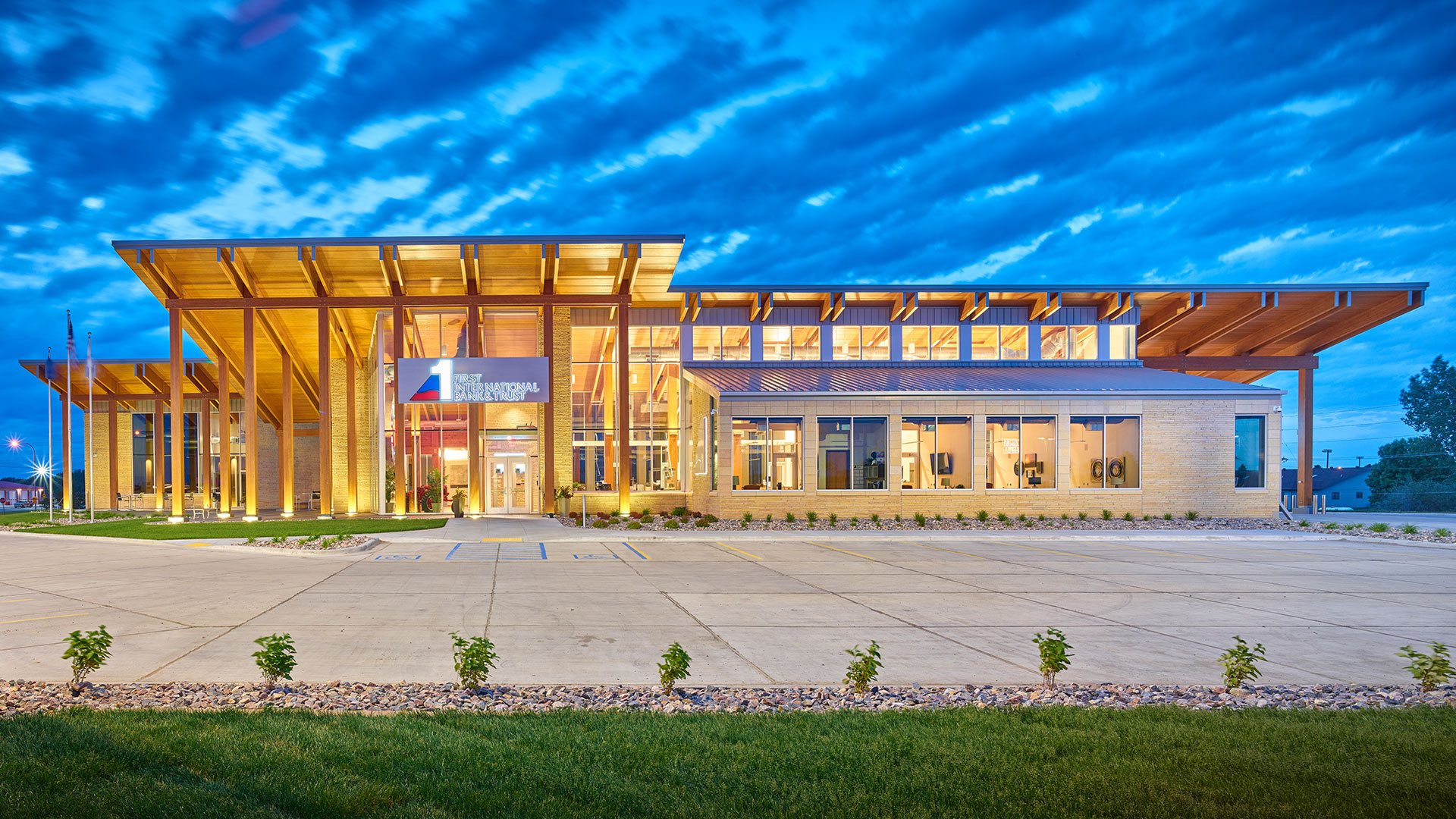
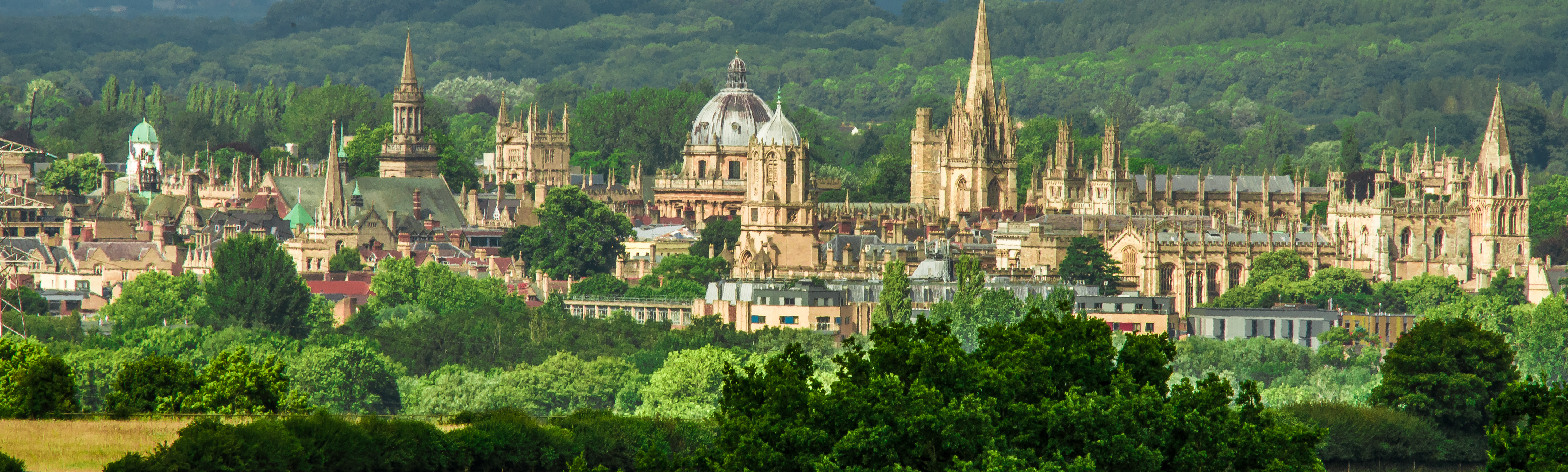


?file=Vivec_-_Morrowind.png)
The state of architecture is a disaster. Ever since Adolf Loos wrote “ornament is crime”, architects have booed anything decorative. We get textures, sure. Oh boy do we get textures. We get all the woods, all the stones, all the 3d printed concrete. Sculpture? Hell, no…
And no it’s not that expensive. When you build 234 park avenue, every apartment sells for $10m. maybe there is some of it that can go towards making things fun a little bit.
The worst part is even Modernist heroes like Corbusier and Wright did fun stuff. The Church at Ronchamp is weird and playful. And Wright’s blocky mayan influence is crazy and refreshing.
Not asking your everyday architect to change overnight, but the people who influence the profession, give the prizes and write the articles seriously need to change.